When Buying a Wedding Dress Off the Rack
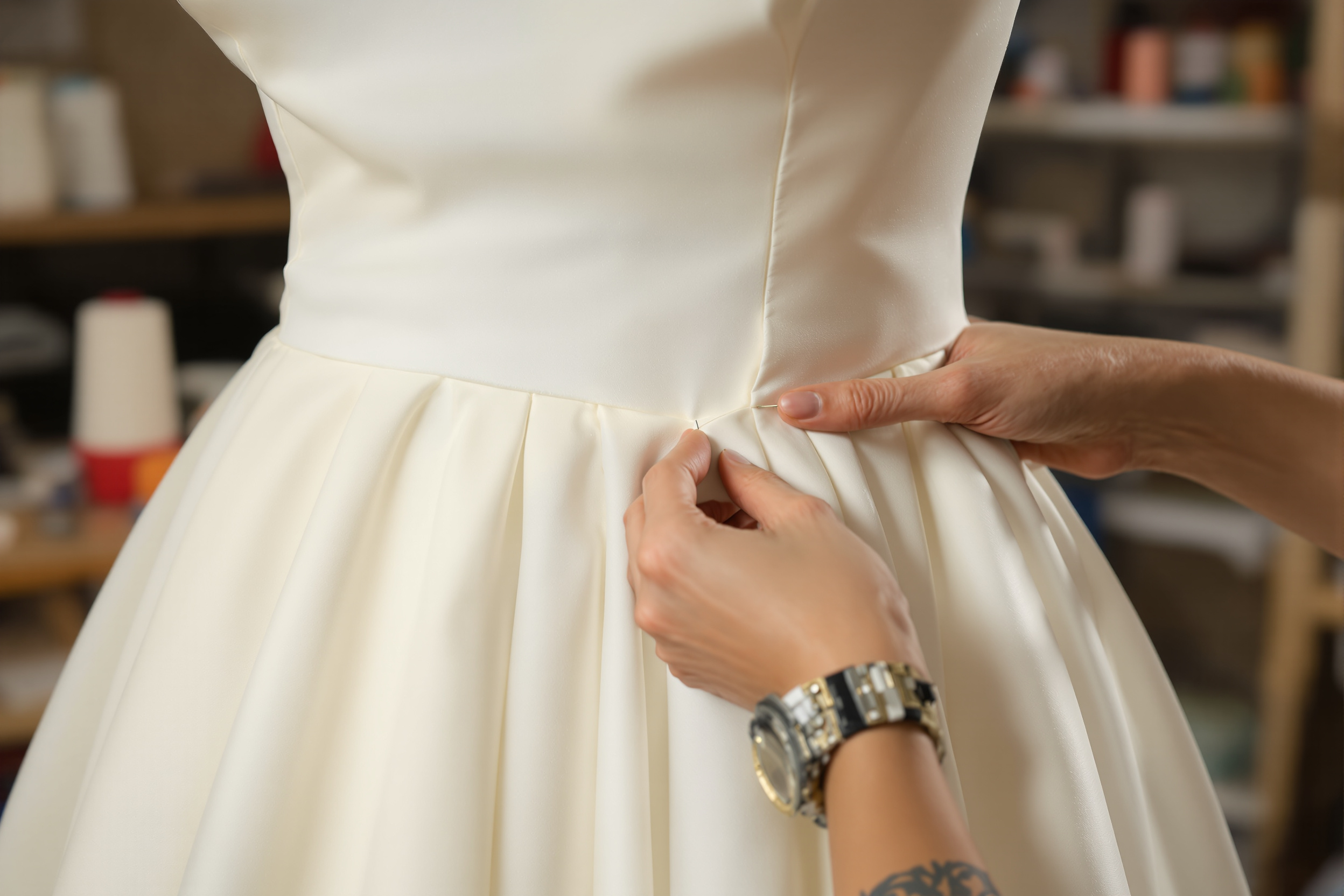
Off-the-rail gowns — sample dresses and end-of-season styles bought as seen on the day — are one of bridal's best-kept secrets. They suit brides on short timelines, brides with firm budgets, and brides who simply fall in love with the very gown on the hanger. But because you are buying a fixed size rather than ordering your own, the fitting arithmetic matters. Here are the rules of thumb from thirty years of fittings.
If the Dress Is Too Big
A wedding dress can be taken down two sizes without losing its original shape — but it is strongly recommended you use a professional wedding dress seamstress, and the closer the gown is to your own size, the better the result. Standard-size wedding dresses rarely fit perfectly straight off the rail, so some alterations are almost always needed to achieve that perfect fit; this is normal, not a flaw.
While it is easier to take a dress in than to let it out, automatically choosing the larger size is not always the best option. For example, if your hips measure a bigger size than your bust and waist, and the dress is an A-line or ball gown, it is usually best to choose the size that suits the bust and waist measurements — the skirt's shape has room for the hips, and the bodice will then need far less work.
If the Dress Is Too Small
Dresses carry a seam allowance and can usually be let out at least one size; many gowns have enough material to let out two. Beyond the seams, a skilled professional seamstress can often suggest clever ways to gain more — corset-back conversions, side panels and lace insets can all add room invisibly when done well.
What Alterations Can and Cannot Do
- Routine: hemming to your shoe height, taking in side seams, adjusting straps and sleeves, adding a bustle for the reception.
- Possible with skill: resizing across two sizes, swapping a zip for a corset back, reshaping a neckline.
- Not realistic: rebuilding heavily beaded bodices, changing the fundamental silhouette, or rescuing a gown more than two sizes away from yours.
Practical Tips for Sample-Dress Shopping
- Know your measurements before you go — our sizing charts show exactly how to take them.
- Remember that bridal sizing runs smaller than street sizing — judge the fit, never the label.
- Inspect sample gowns in daylight: check zips, beadwork, hems and underarms.
- Budget for alterations from the start — a beautifully altered sample gown fits better than an unaltered made-to-order one.
- Allow time for two to three fittings, with the final one in the exact shoes and underpinnings you'll wear.
Trunk Shows and Sample Sales
Two events are worth watching if you love the idea of buying off the rail. A trunk show brings a designer's full new collection into a boutique for a few days only, often with a small incentive to order during the event and the chance to try styles not normally stocked — book early, as appointments fill fast. A sample sale clears showroom gowns at a marked reduction; the trade-off is that samples come in a fixed size and may show light wear, so bring your measurements, inspect each gown in daylight, and budget for cleaning and alterations before you fall in love.
Buying off the rack rewards decisiveness: when a sample gown fits well, feels right and falls within the two-size rule, it can be the smartest purchase in bridal. For the full background on silhouettes and personalisation, return to our wedding dress guide.
◆ ◆ ◆