Services
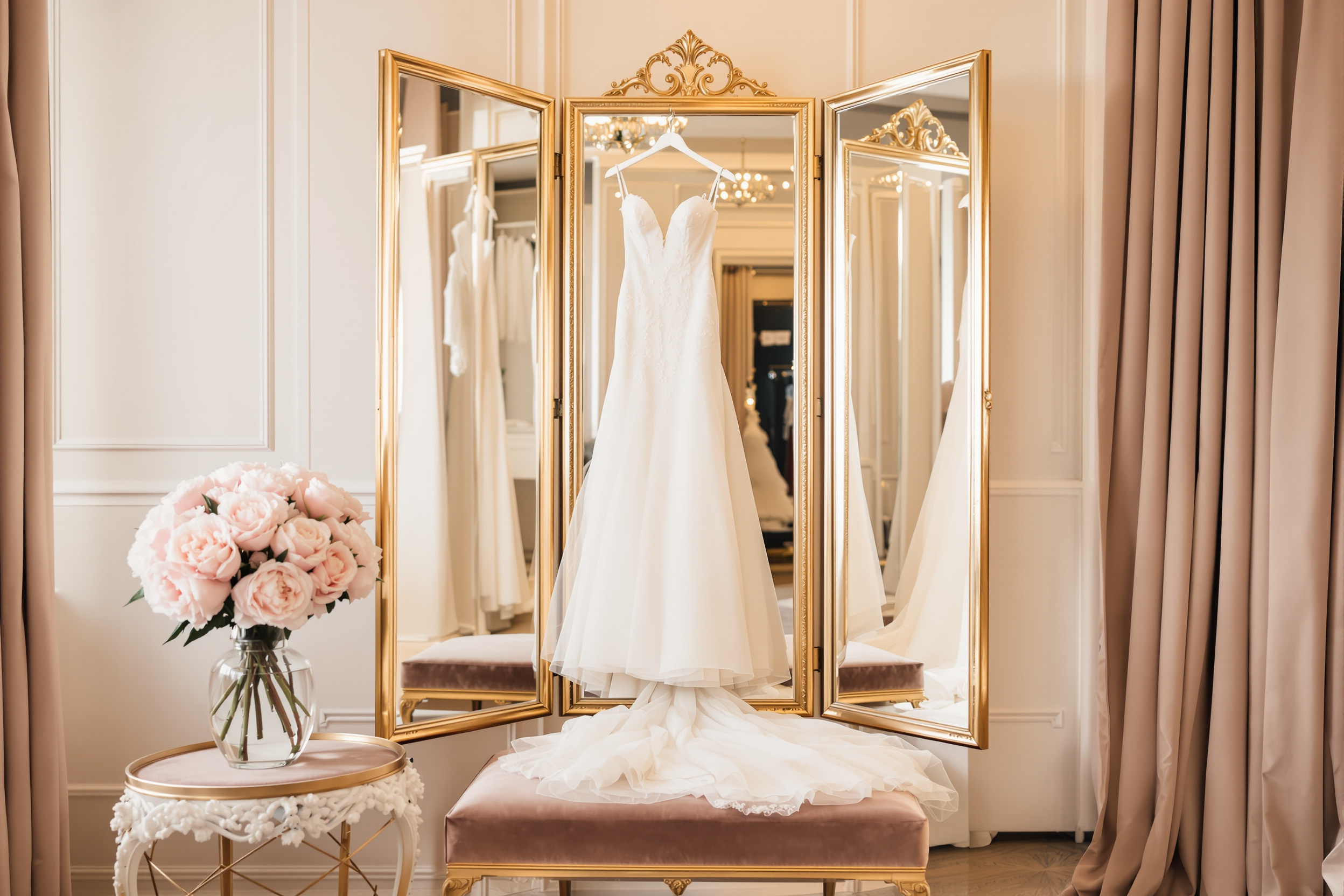
What does a full-service bridal house actually do? Far more than hang dresses on rails. This page explains the services that defined three decades at Tracy Bridal — useful background for any bride deciding what kind of dress-shopping experience she wants.
The Private Consultation
The heart of the service is the one-to-one consultation: a private room, a dedicated stylist, and unhurried time. A good consultation begins with listening — the venue, the season, the photographs the bride has saved, the parts of herself she wants the dress to celebrate. From hundreds of gowns, an experienced stylist will pull a first edit of perhaps six. The skill is not in showing a bride everything; it is in showing her the right things. Brides were always encouraged to bring pictures of their dream dress, and to keep the entourage to one or two trusted voices.
Stylist-Led Gown Edits
Knowledgeable stylists earn their keep in the filtering. After a few minutes of listening, a professional can quickly set aside most of the collection and concentrate on silhouettes that suit the bride's shape, venue and budget. That editing is why boutique appointments succeed where solo browsing overwhelms — and it is the single biggest difference between full-service bridal and buying blind online.
Fittings and Alterations: The Three-Fitting Schedule
Standard-size gowns rarely fit perfectly without tailoring, so alterations are built into the journey. The traditional schedule runs:
- First fitting (8–10 weeks out): the gown is pinned for the major work — side seams, length, bustle planning.
- Second fitting (4–5 weeks out): the altered gown is checked; necklines, straps and beadwork are refined.
- Final fitting (1–2 weeks out): the bride wears her exact shoes and underpinnings; the bustle is taught to the bridesmaids.
In-house alteration by a seamstress who knows bridal construction is worth seeking out: wedding gowns are engineered garments, with boning, interlinings and beaded panels that a general tailor rarely encounters. The limits of what alterations can achieve are explained in our off-the-rack guide.
Personalisation and Semi-Bespoke Work
Some European collections allow gowns to be personalised — necklines changed, sleeves added or removed, skirts swapped between styles. Minor changes often cost little or nothing; combining major elements typically adds up to twenty per cent and around four extra weeks. For a bride who wants an exclusive look without full couture, this is the sweet spot — the details are on our Weddings page.
Beyond Bridal: Occasion Wear
A house that began with debs dresses never forgot them. Alongside wedding gowns, the service extended to bridesmaid dresses in matched and mix-and-match palettes, debs and graduation gowns for school-leavers, and First Holy Communion dresses fitted with the same care as any bridal gown. Sizing and measuring for all of these follows the same principles laid out in our sizing charts.
Preserving the Gown Afterwards
The service does not quite end at the wedding. Once the day is over, a gown should be professionally cleaned as soon as possible — champagne, make-up and hem dirt set into fabric and yellow with time. Specialist bridal cleaners treat beadwork, silk and lace far more gently than a general high-street dry cleaner. After cleaning, store the dress flat in acid-free tissue inside a breathable box, never sealed in plastic, and keep it somewhere cool, dark and dry. Done properly, a wedding gown survives to become an heirloom — worn again by a daughter, or simply kept as the object it deserves to be.
What to Take from This
Wherever you shop, look for the substance behind the showroom: private appointment time, stylists who listen before they pull gowns, a realistic alterations schedule, and honesty about what can and cannot be changed. Those four things — far more than the label on the rail — decide how a bride feels on the day.
◆ ◆ ◆